Last Updated:
August 14, 2026, 11:50 a.m.
By Katelyn Kocis
Leadership in nursing often begins at the bedside. For many nurses, however, it evolves into something broader: shaping systems, guiding strategy and influencing care far beyond a single unit. For four University of Pittsburgh School of Nursing alumnae, leadership has meant stepping into complex administrative roles where nursing voices help steer health systems across the country.
From workforce innovation and quality improvement to executive strategy and systemwide nursing practice, the work undertaken by these individuals exemplifies how Pitt Nursing prepares graduates not only to lead teams but to spark transformation.
Excelling Across Units
UPMC picked up on Ashley Iannazzo’s (BSN ’11, MSN ’14, DNP ’17) star power back when she was still a nursing student in her senior clinical rotations. She was placed at UPMC Magee-Womens Hospital and loved working in medical- surgical and geriatric units.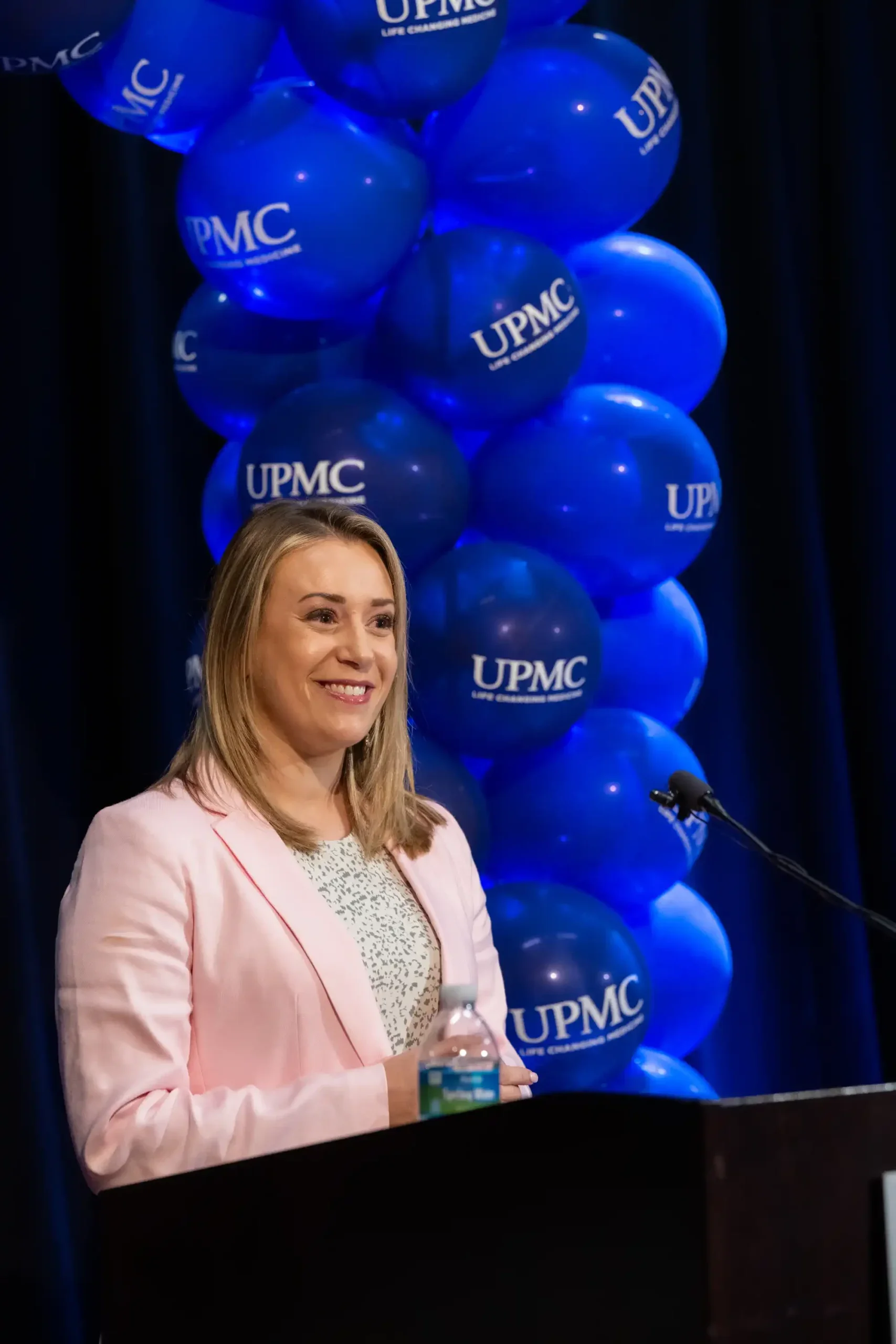
Iannazzo applied for a position on UPMC Magee-Womens Hospital’s medical- surgical telemetry unit during her senior year and was hired over spring break. “I was very excited to have a job before all my friends,” she says. “All of my student experiences really led me to start my UPMC journey.”
Leadership opportunities quickly followed. Within her first year on the job, Iannazzo was training as a charge nurse—an experience that helped clarify her passions.
“I always liked solving problems,” she recalls. “I liked being the person people could come to—whether it was another nurse, a patient or a family member.”
That desire to understand the bigger picture led her back to Pitt to earn a master’s degree in the former Clinical Nurse Leader program.
The degree path’s rigor—and its emphasis on stepping outside one’s comfort zone—proved transformative. As part of her required clinical hours, Iannazzo spent nearly a year embedded in UPMC Magee-Womens Hospital’s quality department, working in risk management and patient safety.
“One of the things I really appreciated about Pitt was that I was required to be in person with someone outside the unit I was working on,” she says. “That exposure really changed everything for me.”
The impact was immediate. The weekend she graduated, Iannazzo received a call from her clinical director. The hospital’s risk manager had gone on leave, and Iannazzo was asked to step into a temporary fellowship. Before long, she was offered the position full-time.
From there, her career continued to evolve across nursing education, quality and hospital administration. She earned a doctorate before eventually joining UPMC’s Center for Nursing Excellence in 2020, where her leadership skills continued to blossom.
Today, as the vice president of clinical workforce operations for UPMC Nursing, her scope includes nearly 600 direct and indirect reports. Her portfolio encompasses major system initiatives, including the launch of UPMC Travel Staffing during the height of the COVID-19 nursing shortage and, more recently, oversight of UPMC’s Virtual Care Center.
Iannazzo is equally proud of the mentorship she’s provided others along the way. “I’ve helped nurses go back to school, coached leaders into new roles and supported people getting exposure they might not have otherwise had,” she says.
She describes her leadership style as collaborative and supportive. “I approach leadership like a sports coach,” she says. “I want everyone to understand their individual role and how it contributes to the bigger picture.”
Rather than giving answers, she often turns questions back to her team. “I’ll ask, ‘What do you think? How do you think that would work?’” she says. “Helping people solve problems instead of telling them what to do is important to me.”
Iannazzo credits Pitt Nursing faculty for playing a pivotal role in her leadership development. She points to Heidi Donovan, Rosemary Hoffman, Margaret Rosenzweig and Patricia Tuite as lasting influences.
“Everyone at Pitt is always in your corner,” she says. “They help you get anywhere you want to be—and they spend a lot of individualized time doing it.”
Shaping Workforce Strategy at Scale
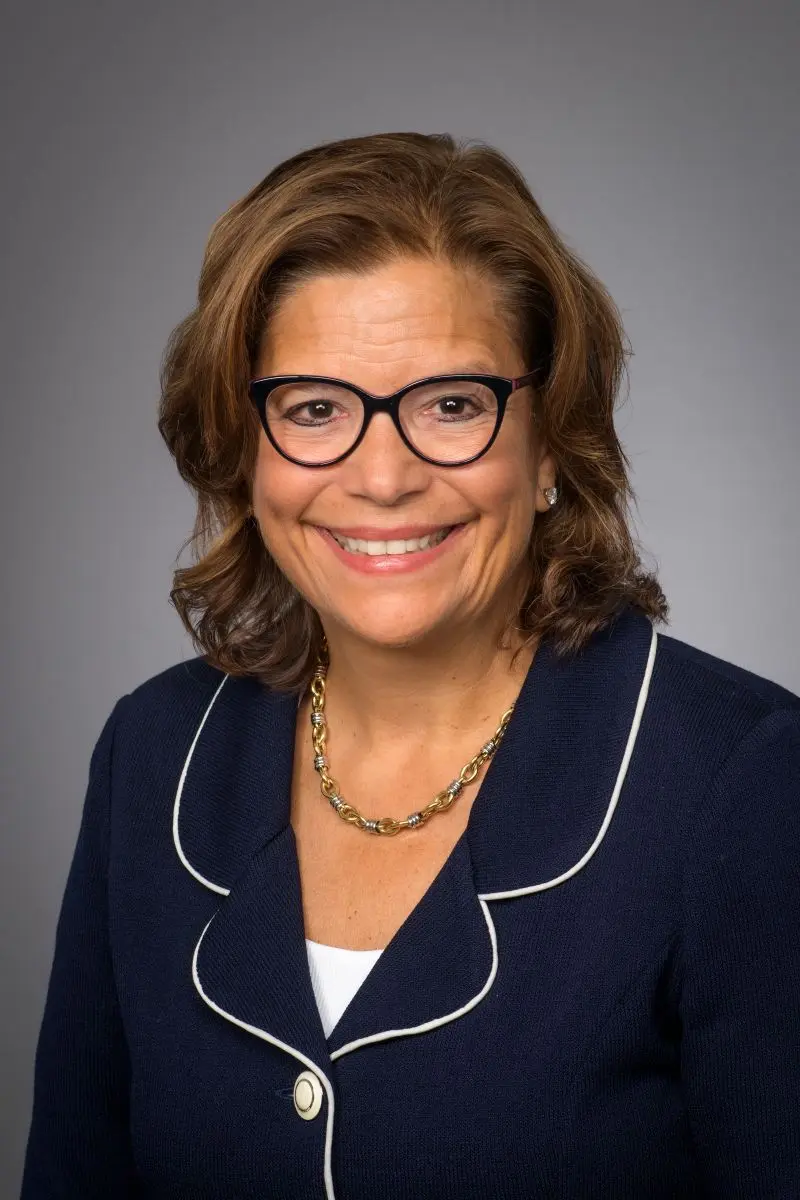
For Melanie Heuston (MSN ’04, DNP ’06), leadership has never been about chasing titles—it has been about loving nursing deeply enough to shape its future.
That enthusiasm—and the mentors who recognized it—set her on a path to becoming the inaugural chief nursing executive of WVU Medicine, the largest health system in West Virginia.
When she began her journey as a Pitt Nursing graduate student, she could not have imagined where it would lead.
“Not for one second did I think I’d be doing this work,” she says. “I just knew I wanted to be a really good nurse.”
At the time, Heuston was working at UPMC Presbyterian when she began collaborating with Gail Wolf, a chief nursing officer, Pitt faculty member and pivotal mentor who encouraged her to pursue her master’s degree at the University. Yet, it was during an especially difficult chapter of Heuston’s life. She had just been widowed and had two small children. Still, Heuston listened.
“I trusted her because she was a good mentor,” she says. “I’m glad I did because that degree really served me as I progressed through leadership. It added credibility to my work and helped me apply what I was learning directly to practice.”
Years later, after completing her master’s degree, Wolf encouraged her once again—this time to pursue a doctorate. Heuston remembers the moment clearly.
“She put her hand on my shoulder and said, ‘You’re going to start working on your doctorate soon, aren’t you?’” Heuston recalls. “I said, ‘No, I’m good. I am too old, and I don’t think I will need this.’”
Wolf’s response became career-defining. “She said, ‘You’re going to be 50 someday. Do you want to be 50 with a doctorate or without one?’” Heuston says. “And I thought—well, if you say it that way.”
So, at age 44, Heuston went on to earn her Doctor of Nursing Practice from Pitt Nursing in 2006.
“I continue to use that education nearly every single day of my career,” she says. “The core competencies are timeless.”
Her doctoral project focused on transformational leadership behaviors of successful nurse managers.
More than 15 years later, Heuston continues to share and publish the work within her project.
“The burden on nurse managers is even heavier today,” she says. “The appreciative inquiry work I did—looking at what nurse managers do well—has continued to serve me in so many ways.”
Yet, what has influenced her more than anything over the years, she says, is the support she’s received from fellow leaders.
“I think it’s critical,” she says. “Susan Hoolahan, who went on to become president of UPMC Passavant, mentored me for five years. She literally oriented me to being a chief nurse officer—every single day.”
That mentorship shaped how Heuston now leads others. Today, as WVU Medicine’s chief nursing executive, Heuston’s role is almost entirely strategic.
Her focus includes strengthening academic partnerships, supporting chief nurses across 25 hospitals and expanding the nursing pipeline through programs like WVU Medicine’s Aspiring Nurses Program.
Rather than seeing her role as directive, Heuston views it as supportive.
“The nurses at the hospitals are carrying the ship,” she says. “I’m just putting wind in their sails.”
Among her proudest accomplishments are leading Magnet journeys at multiple hospitals—a distinction granted by the American Nurses Credentialing Center to acknowledge excellence in health care and nursing. Heuston values these milestones not for the recognition itself but for the work behind it.
“The status isn’t the important piece,” she says. “It’s the roadmap. It’s what you build along the way.”
Spurring Systemwide Change
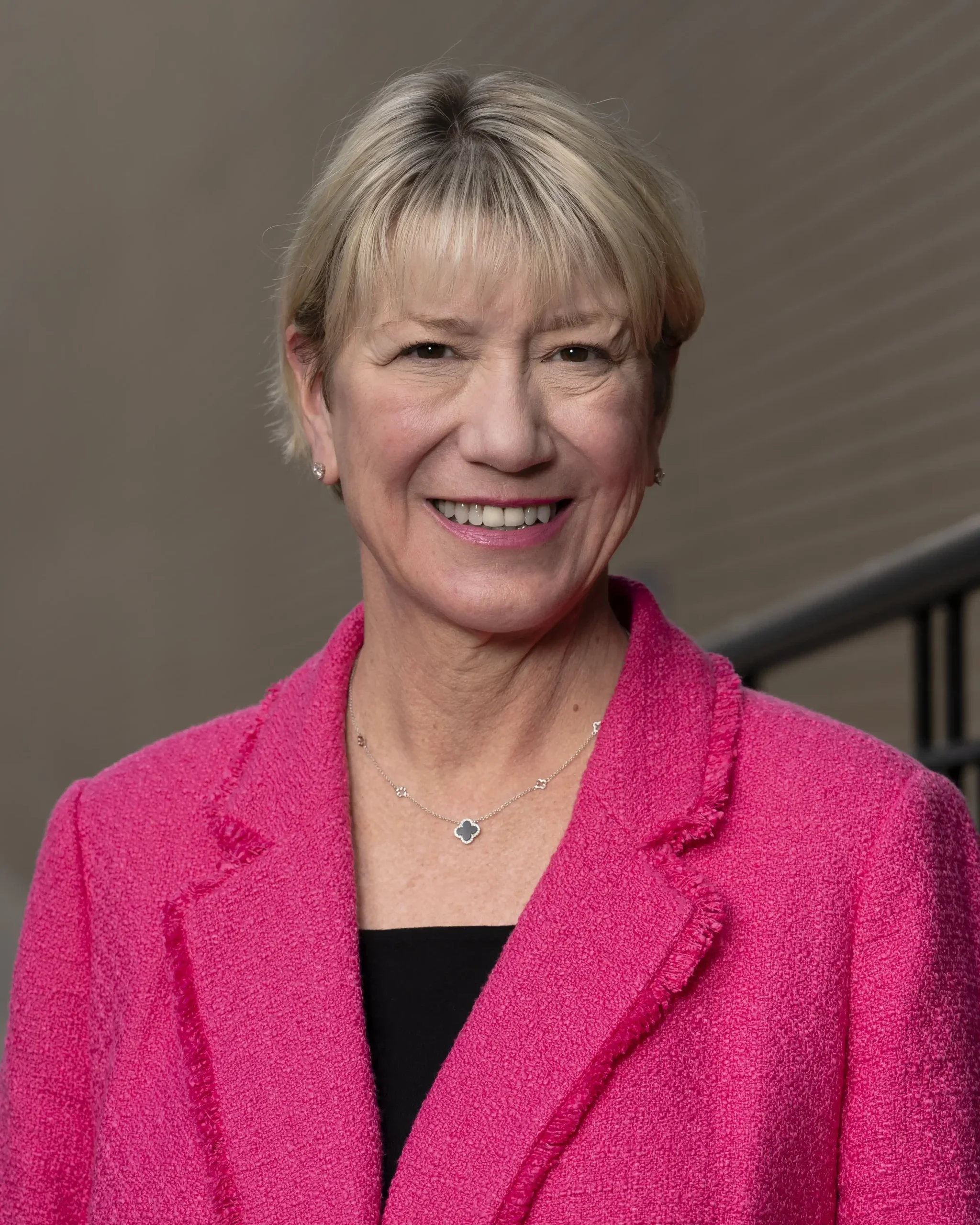
From the beginning of her nursing career, Tamra Minnier (BSN ’84, MSN ’85) was motivated by one simple belief: If she could make things better for nurses, she could make things better for patients.
In her role as the senior vice president of operations for UPMC Health Services Division, Minnier has done just that, overseeing the Surgical Services, Pharmacy, Imaging, and Laboratory service lines throughout the UPMC system. Her purview includes more than 40 hospitals and 800 doctor’s offices and outpatient facilities—an impressive rise to leadership from when she began her nursing career at the age of 19.
After earning her associate’s degree at the University of Pittsburgh at Bradford, Minnier returned to the Pittsburgh campus to complete her Bachelor of Science in Nursing. It was there that her leadership trajectory truly took shape, guided by faculty members who recognized both her potential and her restlessness to improve the system around her.
“When I came to the main campus, Terry Carroll was leading the nursing administration program,” she says. “I remember thinking, ‘This woman is amazing.’”
At the time, Minnier was a new administrator at the Bradford Regional Medical Center and was feeling the weight of leadership challenges. “She could sense what I was feeling,” Minnier says.
“She could sense the challenges but also the opportunities. She told me, ‘You’re already on a leadership trajectory. You should think about your master’s degree.’”
That encouragement mattered. “Terry was instrumental—not just in connecting with me as a student but in helping me feel like what I wanted to accomplish mattered,” Minnier says. “I’ve always had this passion to make things better.”
Another formative influence was Marguerite Schaefer, a former Pitt Nursing dean whose situational leadership class proved foundational to Minnier’s career.
“When I took her course, I felt like I had found the Holy Grail,” she remembers. “For the first time, someone said there isn’t just one way to lead. You have to think about the situation you’re in, what you’re trying to accomplish and how you go about it.”
The foundation she built at Pitt has continued to serve her throughout her career and played a major role in the formation of her own leadership style.
“It’s all about the people,” she says. “Leadership is a privilege. Small things matter. The team is everything. When you build the right culture and align people around a shared vision, the sky’s the limit.”
That philosophy has taken her far. She’s been a leader at UPMC for more than 25 years and also serves as a sought-after public speaker and international health care leader, speaking on topics including quality, patient safety, clinical improvement and leadership. She has seen her influence ripple across borders—sometimes in unexpected ways.
“One of the most surreal moments of my life was visiting a radiation oncology site in Italy,” she says. “They brought me over to a certificate on the wall—an accreditation certificate—and I had signed it in my role as chair of the board for Joint Commission International/Joint Commission Resources.”
The experience was humbling. “I’m always a little shocked when people say they’re excited to meet me,” she laughs. “But for me, it’s always about the give-back.”
It is also about staying connected to the work happening on the ground, she notes. Minnier still makes regular rounds, believing proximity matters.
“Stay close,” she says. “People will tell you what’s right and wrong if you listen.”
As she looks ahead, Minnier is focused on succession, mentorship and sponsorship—using her influence to open doors for others. “Sponsorship is saying someone’s name in a room they’re not in,” she says. “That visibility can change everything.”
Leading With Authenticity and Impact

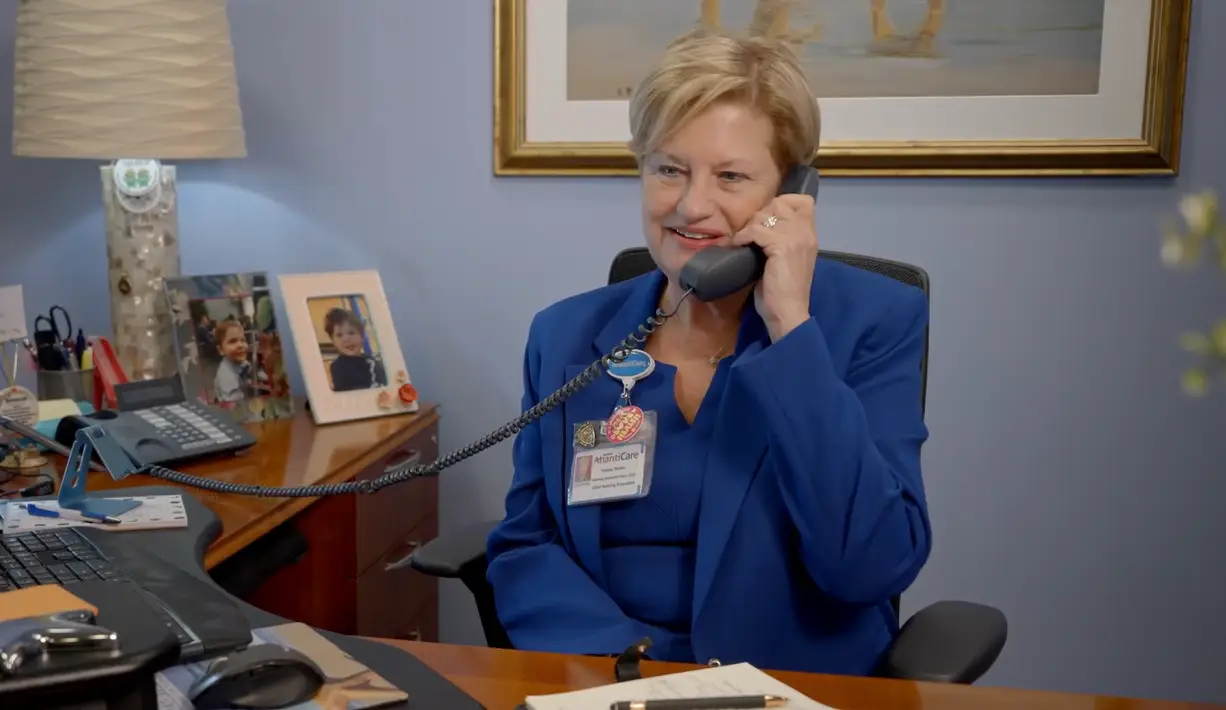
Leadership in nursing was a calling Helene Burns (DNP ’18) recognized early and followed with intention.
“I’m celebrating my 45th year as a nurse,” Burns says. “My first five years were at the bedside, but after that, I did the entire progression—nursing supervisor, nurse manager, director, assistant vice president, vice president, chief nursing officer and then chief nurse executive.”
The increase in responsibility felt natural to her. “Even at the bedside, I was often the charge nurse,” she recalls. “Leadership always made sense to me.”
When Burns enrolled in Pitt Nursing’s Health Systems Executive Leadership doctorate program, she was already serving as a chief nurse executive.
“The content was so rich,” she says. Some of it reinforced what I already knew, but it really helped me become a stronger leader.”
Burns credits Pitt Nursing with delivering both academic rigor and real-world flexibility—an essential combination for a senior executive.
“I did my homework when I was looking at doctoral programs,” she says. “Pitt came right to the top. I loved that it was online and on demand. I could get up early in the morning, do work on the weekends and still have a high-level executive role at the same time.”
Equally impactful were the faculty mentors who supported her throughout the program. Among other key faculty members, Judy Zedreck played a particularly meaningful role.
“She was just so supportive and provided such great guidance,” Burns says. “She was the perfect person to have behind the scenes, giving me encouragement as I was going through the program.”
Burns recently served as chief nursing and operations executive at AtlantiCare, where staying connected to frontline nurses remains central to her leadership philosophy.
“I think that’s a really important part of being a nurse executive,” she explains. “You have to stay in touch and understand where staff are and what they need.”
She does that through regular rounds and what she calls “listening sessions”—bringing people together to discuss what’s going well and what support they need.
“You’re an effective leader when you speak from the heart,” she says. “You’re authentic. You follow up. You deliver what you can. And if something is out of your control, you’re honest about that.”
Among her proudest career moments are achievements that reflect both personal excellence and organizational impact. Burns has been inducted as a fellow into both the American Academy of Nursing and the American Organization for Nursing Leadership—milestones she describes as career highlights.
But one stands above the rest: the moment she learned that AtlantiCare had become a Magnet organization. She says, “It takes a lot of work to get there,” and recalls watching bedside nurses completing the Magnet survey and confidently describing their practice.
“To see how proud they were of the work they do—that makes everything worth it,” she says.
Though she retired in March 2026, Burns quickly enrolled in an executive coaching program and is now shifting her focus to mentoring emerging nurse leaders.
“When you start nursing, you don’t always know what your path will be,” she says. “But my natural path was leadership. What makes me happiest is being able to make positive changes that affect a lot of nurses.”
A Legacy of Leadership—and an Invitation Forward
Though their careers span different generations and roles, these alumnae share a common perspective: Leadership is not about authority— it’s about responsibility. Responsibility to listen. To mentor. To stay connected to the front line. To use influence not for personal advancement but to uplift others.
Each credits Pitt Nursing not just for its academic rigor but for something deeper—faculty mentors who saw potential before they did, programs that pushed them beyond comfort zones and experiences that opened doors they didn’t yet know existed. Now, they are opening doors for the next generation of nursing leaders who, like those before them, will help build a brighter future for nurses and their patients.
This article originally appeared in the summer 2026 edition of Pitt Nurse magazine. Read more stories of alumni accomplishments in “The Leadership Issue.”