Last Updated:
September 16, 2026, 11:20 a.m.
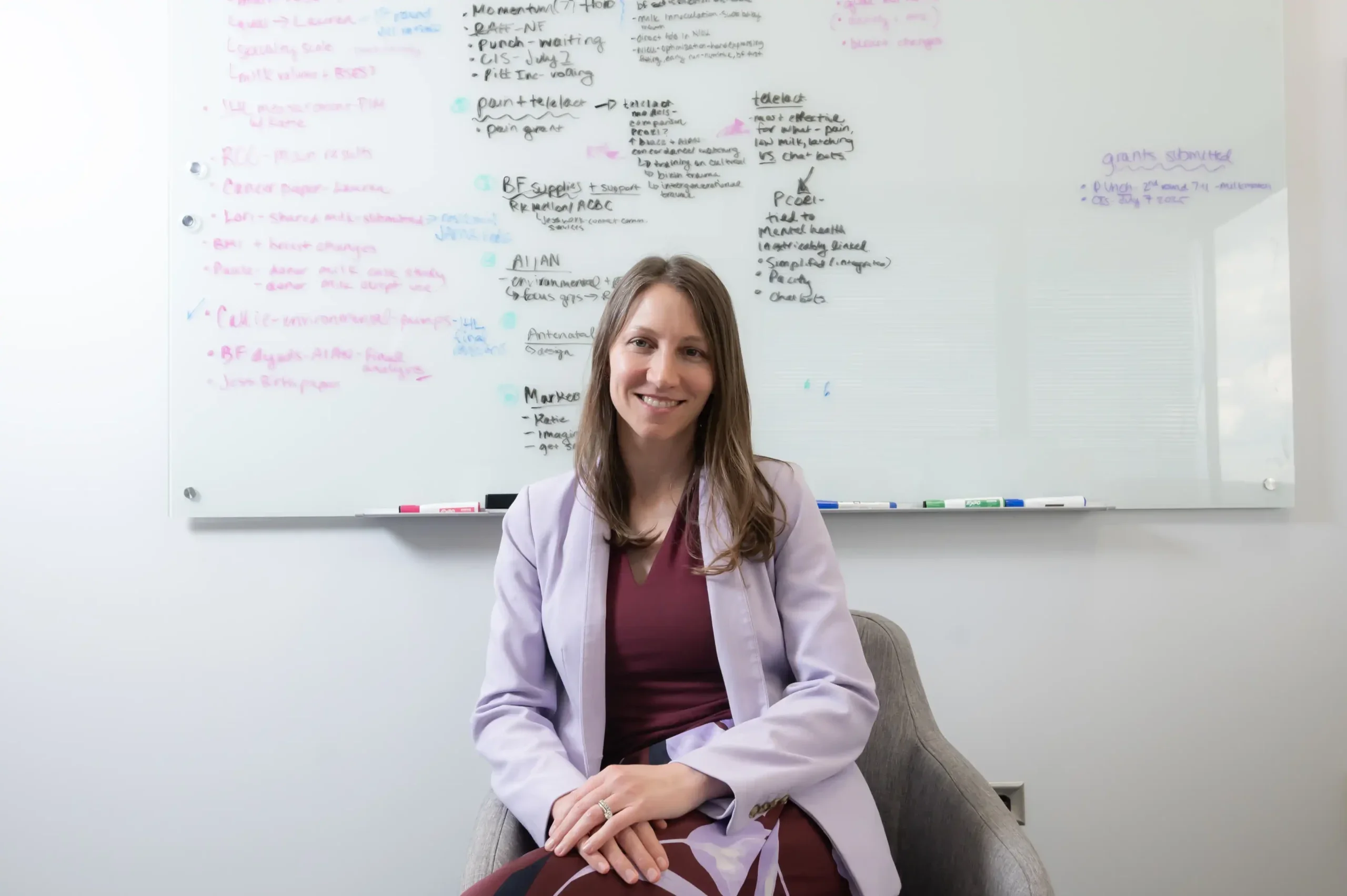
Nurses are natural problem solvers. They routinely embrace new technologies, identify unmet needs and break down barriers that prevent patients from receiving optimal care. And yet, nurses are rarely present when health care solutions are designed, funded and brought to market.
Jill Demirci (BSN ’05, MSN ’10, PhD ’12) is working to change that. In addition to serving as a University of Pittsburgh School of Nursing associate professor and vice chair for research and scholarship, she is leading new efforts to foster nursing innovation and entrepreneurship across the school.
As director of the Office of Nursing Innovation and Impact, Demirci wants to help faculty members and students explore bold ideas, from patentable products to critically needed services. Pitt is nationally recognized for its leadership in nursing research, but Demirci said there are untapped opportunities to advance health care through innovation.
“You can write a publication and summarize your findings and, after that work is done, another academic may decide to pick it up and build upon it,” Demirci said. “It’s a great and rigorous model, but it’s slow and it’s not the only model to move science and health advancements forward.”
The new office is still getting off the ground, but Demirci is already welcoming email outreach from researchers, staff and students who want to build, test and commercialize their ideas. Undergraduate students are also encouraged to reach out for mentorship, even if their clinical experience is limited.
The office is currently piloting a research-innovation undergraduate nurse fellowship, and formal application processes for both the fellowship program and broader support are being developed. No business background is necessary to apply—just an idea and a willingness to learn.
As a nursing entrepreneur herself, Demirci benefited from a fellowship offered through the Innovation Institute’s Pitt Empowering Innovation, Incubation and Impact (EI3) program. She said nurses are already well positioned to make an impact. All they need is a little support.
“As nurses, we take care of patients and families from a holistic angle, which feeds into developing systems, products and services that meet real needs,” Demirci said. “We have lots of ideas—it's just a matter of executing them. This office will provide the resources and a little push to get started.”