Last Updated:
October 27, 2026, 10:53 a.m.
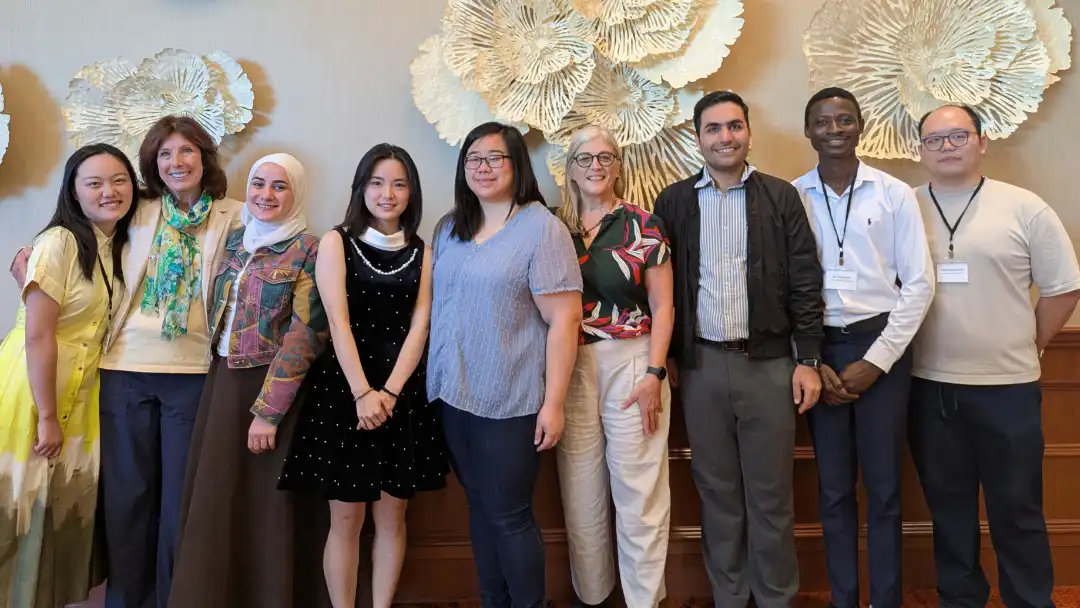
by Emily Nunez
University of Pittsburgh Professor of Nursing and Medicine Heidi Donovan didn't just win a conference award for her significant contributions to caregiving research. The award itself was named in her honor.
In September 2026, Donovan became the first recipient of the Donovan Award for Leadership in Caregiving Research. She was formally honored in Salt Lake City, Utah, during the 4th Biennial Conference on Caregiving Research, an event she co-founded with Pitt colleagues in 2020.
Going forward, this honor will be bestowed on leaders "whose work reflects Dr. Heidi Donovan's commitment to advancing caregiving science, fostering interdisciplinary collaboration, mentoring future researchers and translating evidence into meaningful improvements for caregivers and families," conference organizers said during the award ceremony.
Donovan called this recognition the “award of a lifetime.” She has devoted her research and practice to developing, testing and implementing interventions to support patients with cancer and their family caregivers. As co-founder and director of the Family CARE Center at Magee-Womens Hospital’s UPMC Hillman Cancer Center, she and her colleagues have worked to implement an evidence-based program to screen and provide education, support and resources to family caregivers of women diagnosed with gynecologic cancer.
She has also partnered with national organizations including the Foundation for Women’s Cancer and the National Ovarian Cancer Coalition (NOCC) to develop education and support services for family caregivers. She remains active on national committees, serving on NOCC’s Medical Advisory Board for more than 20 years.
Between 2019 and 2025, she was the principal investigator and co-director of the National Rehabilitation Research and Training Center on Family Support (NCFS), funded by the National Institute on Disbility, Independent Living, and Rehabilitation Research. The center’s goal was to not only conduct family caregiving research and train predoctoral and postdoctoral scholars, but also to work with partner organizations to ensure that family caregiving research yielded services and support programs for people with disabilities and their families.
It was in that role that Donovan poured her efforts into creating, then expanding, the Biennial Conference on Caregiving Research. She and her colleagues hoped to create a central hub for researchers, clinicians and advocacy organizations to share their work, exchange ideas and accelerate research that addresses the most pressing problems facing family caregivers.
“For decades, family caregiving research has been siloed based on the disease, disability or stage of life of the person receiving care, limiting opportunities for shared discovery and collaboration,” Donovan said.
In just a few years, the conference grew from a small regional gathering to a nationally recognized conference that now attracts hundreds of attendees. The University of Utah hosted the 2026 iteration, marking the first time the conference has been held outside of Pittsburgh. The event drew 365 attendees from across the United States and Canada, including more than 60 predoctoral and postdoctoral trainees.
A new National Institute on Aging grant will help fund the next two conferences in 2028 and 2030, and Donovan is excited to see how the event will continue to flourish.
"We advocated for a conference that would break down silos—one that would be fully cross-disciplinary and would include researchers focused on caregiving across the life course and across the full range of patient illnesses and disabilities,” Donovan said. “And from the beginning, we were committed to a conference that would inspire and lift up the next generation of family caregiving scientists through mentoring."